What 70+ Entrepreneurs Making $500K+ Have in Common
A member of the Moda Collective Facebook group asked a deceptively simple question about $500K+ earners. Over 70 business owners responded with real, unfiltered answers. Here are the 8 patterns — and the one thing nobody mentioned.
A few weeks ago, a member of the Moda Collective Facebook group posted a question that most business communities would have buried under motivational memes and course pitches: "For everyone doing over 500k in net income yearly — what do you do? How did you start? What is the end goal? What separates you from others?"
What followed was remarkable. Over 70 entrepreneurs responded — not with humble-brag highlights, but with real, specific, unglamorous answers about how they actually got there. Plumbers. HVAC contractors. Insurance brokers. Jewelry makers. Real estate investors. Home services operators. Truckers. Used car dealers. A guy who sells gun parts. A woman with a clothing brand she spent 30 years building.
I read every single response and consolidated the patterns. What emerged was a remarkably consistent playbook — hiding in plain sight in a Facebook thread that most people scrolled past.
The 8 Patterns
They Didn't Start With a Grand Plan
Most stumbled into their industry through circumstance — a buddy's truck, a friend's referral, a hobby that became a business, or simply needing to pay bills. Very few describe some strategic master plan. The plumber apprenticed for 12 years. The shoe guy started at 15. The gun parts founder discovered the market through a hobby. Almost nobody says "I identified a high-margin market opportunity and executed a structured entry strategy."
They Scaled a Simple Business, Not a Clever One
The dominant model is taking a straightforward, often unglamorous service — painting, plumbing, HVAC, flooring, insulation, moving, trucking, used cars — and just doing it better and longer than everyone else. As one respondent put it: "Most people making 500k are doing the same thing they did making 50k, just at scale." No proprietary technology. No clever arbitrage. No exotic business model. Boring services, executed obsessively well, at volume.
Client Obsession Is the Recurring Edge
Almost nobody claims a proprietary product or unique technology. Their differentiator is consistently: answering every call, treating customers like people, being first in and last out, going above and beyond. The custom jeweler who obsesses over every prong. The plumber who describes working "like I was poor" even after he wasn't. The real estate agent whose entire business runs on referrals because she never stopped treating every client like it was her only client. Execution-level reputation, compounded over years.
The Exit Strategy Is Almost Always Real Estate
Whether they're in watches, plumbing, restaurants, or car dealing, an overwhelming number are funneling profits into rental properties, commercial real estate, or real estate notes. It's the universal wealth-parking vehicle in this crowd. The business generates the cash flow. Real estate stores it, multiplies it, and provides the passive income base that eventually makes the business optional.
They Eventually Learned to Delegate
Several mention the transition from doing everything themselves to building teams as the critical inflection point. The anonymous home services owner describes building out sales, field, admin, and executive teams until the business ran without him. One poster just wrote "DELEGATE" in all caps. The shift from technician to business owner — from being the best at the work to building the system that does the work — is the single most common threshold between $200K and $500K+ earners.
Lifestyle Inflation Is Intentionally Capped
The anonymous home services poster making $100K+/month budgets his personal life on $20K. Multiple people describe living well below their means for years. There's a shared awareness that income above a certain threshold doesn't meaningfully change quality of life — and that the real game is deploying capital, not spending it. The Ferrari can wait. The rental property can't.
The Time Horizon Is Long
10, 15, 20+ year timelines are the norm. Almost nobody describes getting here quickly. The recurring message is patience, consistency, and compounding — of skills, relationships, and capital. The plumber who apprenticed for 12 years before starting his own company. The clothing brand founder who spent 30 years writing her story. These are not overnight-success narratives. They're compound-interest narratives.
Passion Matters — But Mostly as Fuel for Endurance
Nobody got rich because they "followed their passion" in a romantic sense. But the ones who lasted long enough to hit $500K+ tend to genuinely enjoy their work — not because they loved it on day one, but because competence breeds enjoyment, and enjoyment sustains effort through the years when the money isn't there yet. One entrepreneur said it well: "My story separates me from others. I followed what I love and it can't be recreated because it took 30 years to write."
The Part Nobody in the Thread Mentioned
Here's what jumped out to me as a tax strategist who works with business owners at exactly these income levels: almost nobody talked about tax strategy.
One commenter said "Paying 37% in taxes sucks." Another mentioned paying for a "good tax accountant." A third asked what the tax implication on $500K net even is. That's it. Three mentions out of 70+ responses.
And yet, for a business owner clearing $500K–$1M+ in net income, the difference between a reactive tax preparer and a proactive tax strategist can easily be six figures per year.
The Math at $500K Net Income
Without planning: Federal + state effective rate around 42–48% = $210K–$240K in taxes.
With a defined benefit plan stacked on a 401(k): shelter $200K–$250K of income = $80K–$100K in annual tax savings.
Add S-Corp salary optimization, accountable plans, cost segregation on real estate, and entity structure — and the number climbs further.
The anonymous poster paying himself $1,475/week in W-2 wages plus $80–$100K/month in owner's draws? That compensation structure alone has massive tax implications that most business owners never optimize. The gap between what he's paying and what he could be paying with the right structure isn't a small number.
These entrepreneurs have figured out the hard part — building a business that throws off serious cash. The opportunity now is making sure they keep as much of it as possible.
The Condensed Playbook
After reading 70+ responses from entrepreneurs earning $500K+ per year, the formula is not complicated. It's not easy, but it's not complicated:
Pick something. Get good at it. Take care of your clients obsessively. Delegate when you can't grow alone. Deploy your profits into real estate or other income-producing assets. Cap your lifestyle. Be patient. Repeat for 10–20 years.
That's the playbook. It's hiding in plain sight in a Facebook thread. The only thing missing from the thread is the chapter on keeping what you make.
For Trade Contractors Reading This
The Moda Collective thread is full of your peers — HVAC operators, plumbers, painters, home services owners — many of them doing exactly what you do, at the scale you're working toward. The patterns are yours. The tax piece is where most of them are leaving real money behind. If you're netting $300K+ and haven't had a strategic tax planning conversation — not just a return preparation — that's the next conversation worth having.
Adam Libman is the founder of Libman Tax Strategies LLC, where he helps business owners — especially trade contractors in the $3M–$8M range — keep more of what they earn through proactive tax strategy and fractional CFO services. With 25 years of experience and over 100,000 tax returns processed, he's seen every version of this story.
Related Reading
Clearing $300K+? Let's Talk About the Tax Side.
Our $5,000 Financial Health Assessment identifies your top tax and cash flow opportunities — or you get your money back. Built for business owners who've figured out revenue and are ready to optimize what stays.
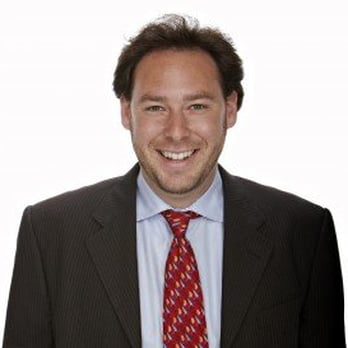
25 years helping contractors and business owners close the gap between what they make and what they keep. Based in Washington, Utah.